
Water Mitigation & Structural Drying in Sarasota & Charlotte Counties
A proper dry-out is more than putting fans in a room. Florida Builders & Restoration reviews the affected materials, removes standing water when needed, sets a drying strategy, monitors conditions and connects the mitigation phase to repairs without losing the original damage context.
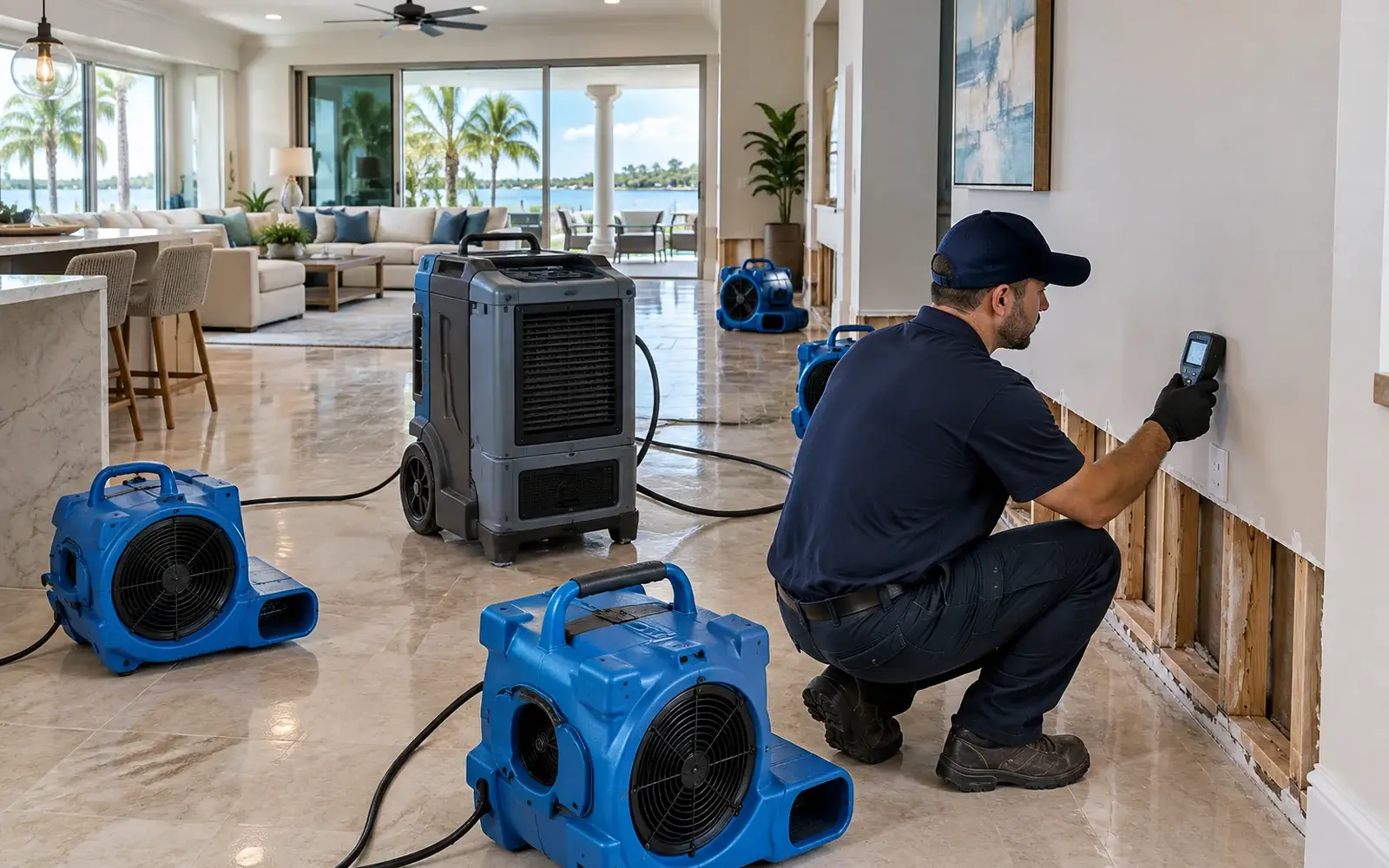
Start with the property problem, not a generic package
The goal of mitigation is to reduce additional damage and move affected materials toward a dry, stable condition. The plan can involve water extraction, targeted air movement, dehumidification, selective access to wet assemblies and repeat moisture checks. Equipment placement and duration should follow the materials and readings—not a fixed template.
What helps on the first call
- Source and approximate time of the water loss
- Rooms, flooring and walls that are affected
- Whether standing water remains
- Whether cabinets, built-ins or wall cavities are involved
- Previous leaks or known moisture issues nearby
- Access limits, occupied rooms and scheduling concerns
Common reasons property owners call
Each loss is different. These are common starting points, not a promise that every item is included in every project.
How the work moves from first response to a finished property
Florida Builders & Restoration keeps the emergency, drying and reconstruction context connected so decisions made early in the project do not have to be rediscovered later.
Extract accessible water
Remove standing water and reduce the immediate moisture load before the structural drying plan is finalized.
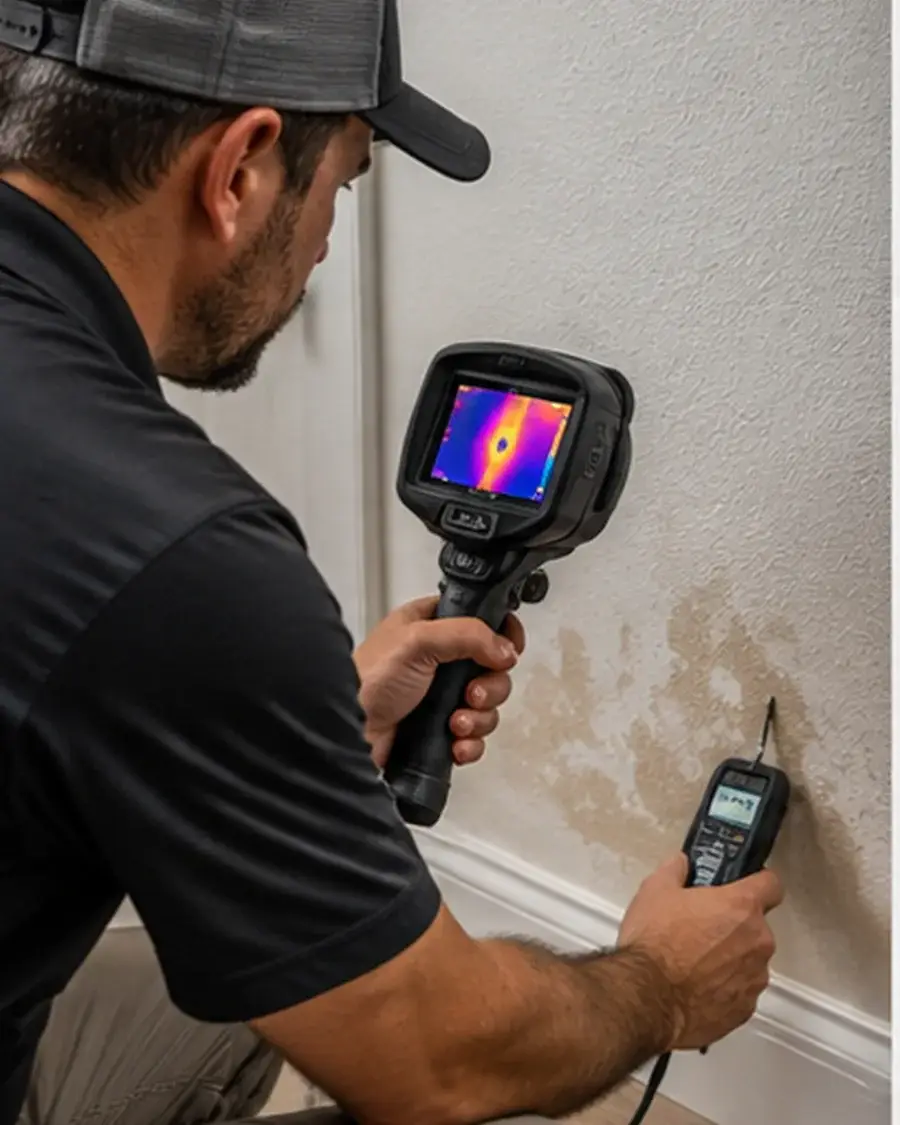
Measure the affected area
Check the materials and define the wet boundary so drying resources are placed where they are actually needed.
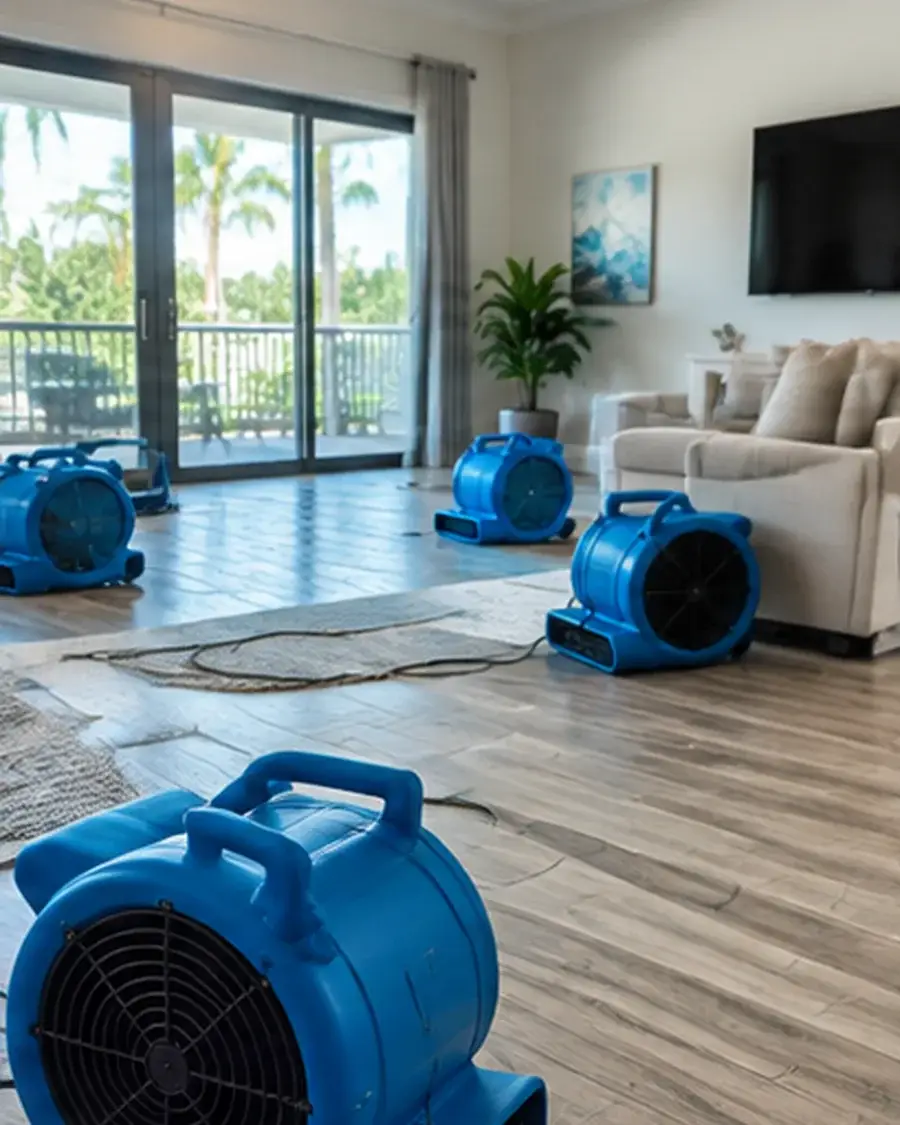
Create air movement
Move dry air across wet surfaces and assemblies to support evaporation without relying on random fan placement.
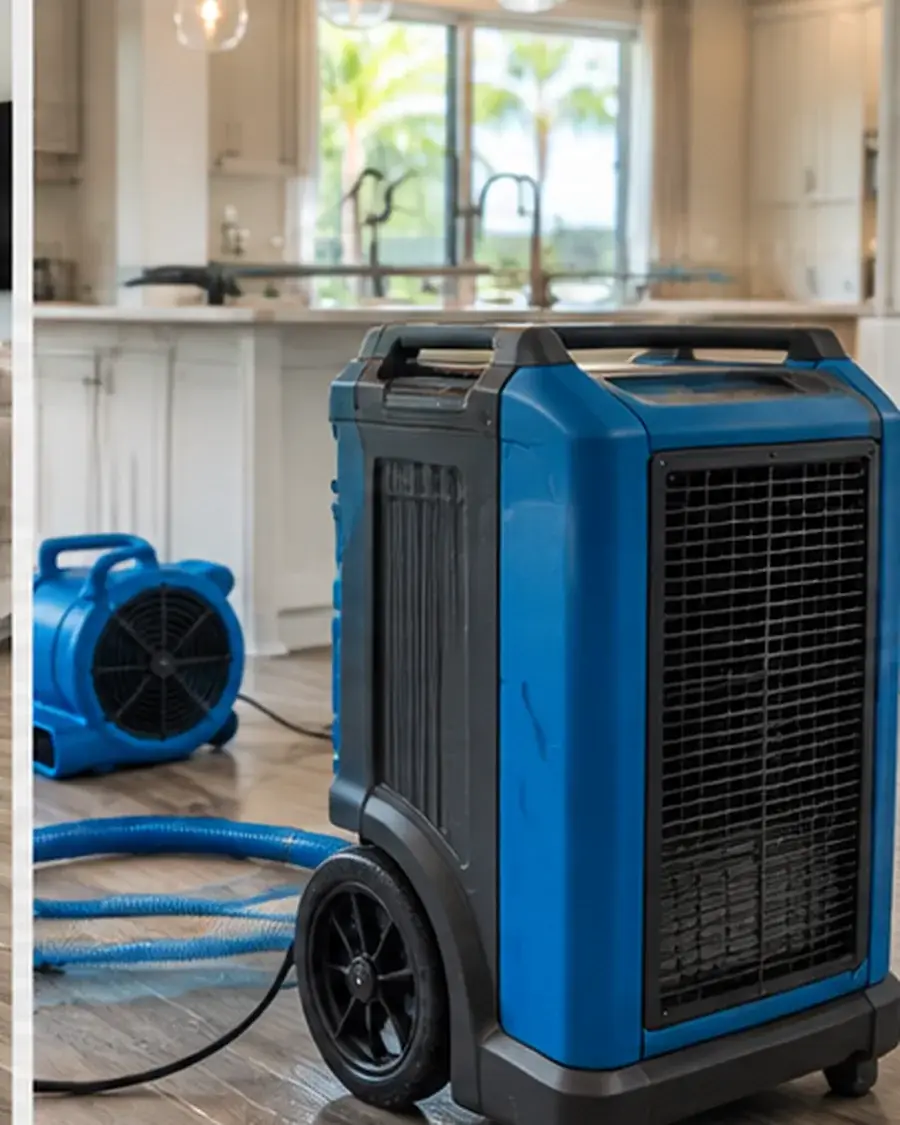
Control humidity
Use dehumidification to remove moisture from the air so evaporation can continue effectively.
Monitor and release
Repeat moisture checks, adjust the layout when needed and confirm readiness before construction finishes are replaced.
What determines the right scope for this property
These checkpoints help turn a broad service request into a practical plan for the specific building, materials and stage of work.
Extraction and drying are different tasks
Extraction removes accessible standing water. Structural drying addresses moisture held in materials and assemblies after surface water is gone. Treating those as separate steps helps avoid declaring a space complete while absorbed moisture remains.
Equipment follows the materials and readings
Air movers and dehumidifiers are tools, not a fixed recipe. The drying setup should reflect room volume, material types, moisture conditions, access and the path water traveled. Equipment can be repositioned as readings and conditions change.
Hidden areas need a deliberate access plan
Cabinet bases, wall cavities, layered flooring and transitions between rooms can hold moisture beyond the visible surface. Selective access may be more useful than broad demolition when it provides the information and airflow needed to dry or evaluate an assembly.
Monitoring is part of the dry-out
Repeat checks help show whether conditions are moving in the right direction. Monitoring can reveal areas that need more airflow, dehumidification or access, and it creates a better handoff point for construction decisions than relying on touch or appearance alone.
Repairs begin after readiness, not by calendar
The transition from mitigation to rebuild should be based on the condition of the affected assemblies and the agreed construction scope. Coordinating both phases under the same project context helps prevent new finishes from covering unresolved moisture or incomplete substrate work.
Why the local building context matters
Warm, humid Southwest Florida air can make drying slower when moisture is trapped in layered assemblies. Tile over slab, floating flooring, baseboards, cabinets and wall cavities can each behave differently. A measured drying plan is more reliable than guessing from room temperature or surface appearance.
What not to rush
- Do not judge dryness by touch alone; surfaces can feel dry while moisture remains below or behind them.
- Do not turn equipment off or move it without coordinating the drying plan.
- Do not close wet wall cavities or install replacement flooring too early.
- Do not assume every material needs removal; salvageability depends on material, exposure and condition.
See the work path at a glance
Realistic representative scenes make the sequence easier to understand without hiding the fact that each property requires its own scope.
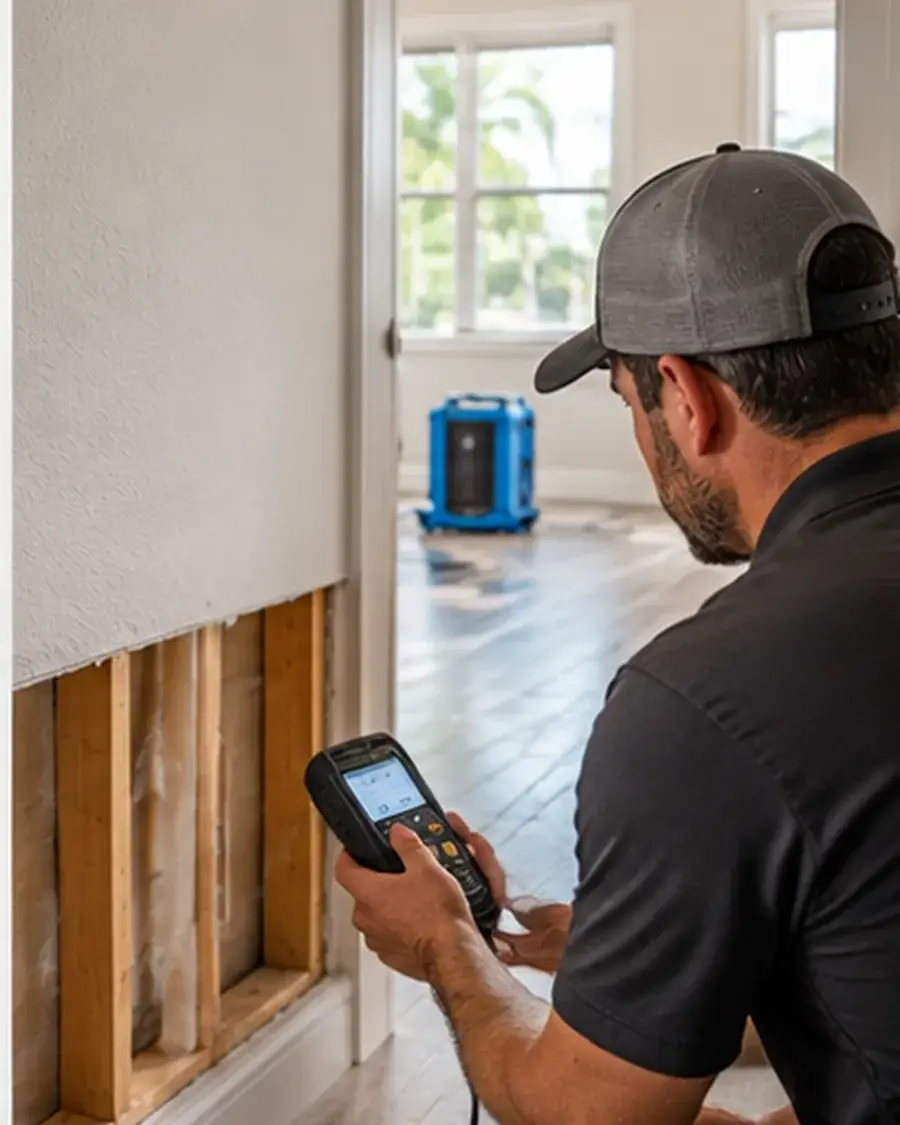
Keep the damage, drying and repair record connected
A useful mitigation record connects the loss to the repair scope. Florida Builders & Restoration organizes affected-area notes, visible-condition photos, drying observations and the transition into repair so the project does not restart from zero when reconstruction begins.
One contractor for connected construction scope
Florida Builders & Restoration operates under Florida Certified General Contractor license CGC1532659. The written estimate controls the work. Regulated specialty work is coordinated with appropriately qualified providers where required.
Water Mitigation & Structural Drying across Sarasota County & Charlotte County
Choose a local water-damage page below for restoration help in your area. For water extraction, structural drying and repair coordination, call with your city, the source of the loss and the affected rooms. Availability depends on the property and project scope.
Sarasota County · cities and communities
Charlotte County · cities and communities
Nearby coastal service area: Boca Grande water damage restoration. Tell us about access, affected materials and repair needs when you call.
Questions customers ask before work begins
How is structural drying different from simply running fans?
Structural drying combines moisture checks, controlled air movement and dehumidification based on the affected materials and room conditions.
How long does structural drying take?
There is no honest fixed number of days. Water volume, materials, humidity, access and assembly depth all affect the drying path.
Why do moisture readings need to be repeated?
Repeat checks show whether materials are improving and whether equipment placement or the repair boundary should change.
Can mitigation and reconstruction be handled by one contractor?
For eligible scope, Florida Builders & Restoration can carry the project from mitigation into drywall, flooring, trim, paint, tile and other connected reconstruction.
What areas do you serve?
Florida Builders & Restoration serves Sarasota County and Charlotte County, including our primary cities listed on this page.
Customer experiences
Reviews mentioning water & storm damage
Across all services · 5 sources
Selected from feedback that mentions this work. Original wording and source links are preserved.
Lincoln Cook
Florida Blue Restoration did a great job! They installed laminate flooring, completed interior painting and trim work, installed bathroom cabinets, and handled water damage restoration, including drying out the kitchen. Very professional work, and we’re happy with the…
Read full review
Google · Lincoln Cook ↗Source date: 1 month ago
Derek Spencer
We had a water leak in Venice, FL, and Paul and his team responded within hours. They handled the dry out and restoration professionally and kept us updated every step of the way.
Facebook · Derek Spencer ↗Source date: July 5
Demnis
Excellent work thanks Paul hire this guy you won't be disappointed he remodeled 2 homes for my family hurricane damage everything is perfect
Houzz · Demnis ↗Source date: April 8, 2024